
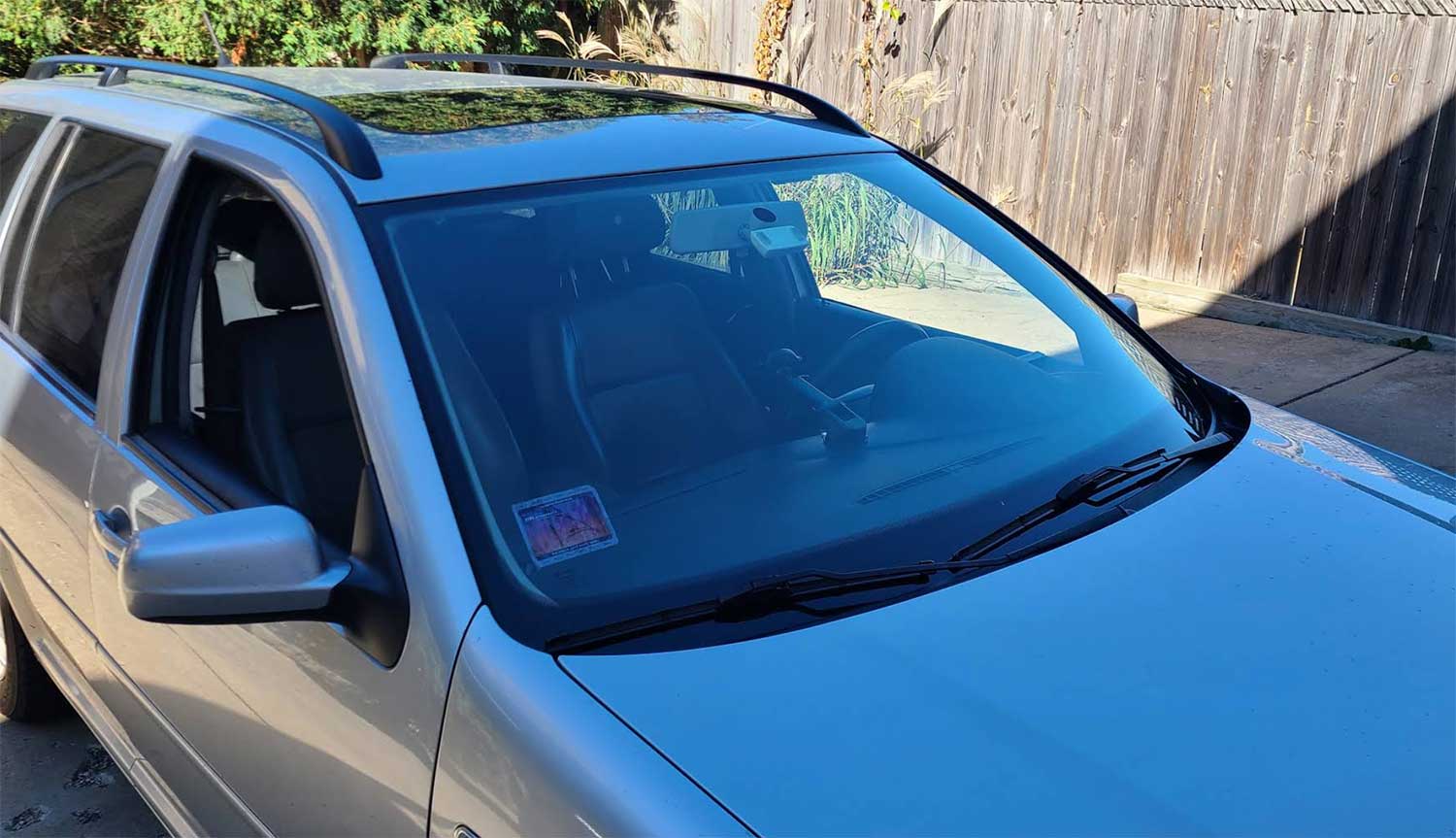
Tree sap, sticker residue, tape adhesive, parking decals, and other sticky substances have a way of finding their way onto your windshield. Once they’re baked on by the sun or smeared by your wipers, ordinary windshield washer fluid may not be enough to remove them.
The good news? Most adhesive and tree sap can be removed from automotive glass with the right solvent, a little patience, and the proper technique.
At Twin Cities Auto Glass, we know how important it is to keep your windshield clean and clear. Here are some of the best ways to remove stubborn sap and adhesive without unnecessarily damaging your auto glass.
Why Is Tree Sap So Difficult to Remove?
Tree sap contains sticky resins that can harden when exposed to air, heat, and sunlight. Pine trees are particularly notorious for leaving stubborn drops of sap on vehicles.
Fresh sap is usually much easier to remove than old, hardened sap. Once it has dried and collected dirt, repeatedly running your windshield wipers over it can spread the residue across the glass, creating a hazy or streaky area that can interfere with visibility.
The same basic problem can occur with adhesive from stickers, decals, tape, parking permits, or other materials.
Start by Cleaning the Windshield
Before reaching for a chemical solvent, wash the windshield with automotive soap and water.
This step matters because dirt, road grit, and other debris can become trapped beneath your towel or scraper. Rubbing those particles across the glass can create fine scratches.
After washing, dry the area with a clean microfiber towel.
Whenever possible, work in the shade with a cool windshield. A hot windshield can cause solvents to evaporate quickly and can make sticky residue more difficult to work with.
Option #1: Isopropyl Alcohol
Rubbing alcohol is one of the easiest household options for tree sap and many types of adhesive.
A 70% or higher isopropyl alcohol solution can help dissolve the sticky residue without requiring aggressive scrubbing.
Here’s how to use it:
- Put on gloves and make sure the windshield is cool and clean.
- Apply rubbing alcohol to a clean microfiber cloth—not directly all over the windshield.
- Place the dampened section of the cloth over the sap or adhesive.
- Let it sit for roughly 30–60 seconds to soften the residue.
- Gently rub the area.
- Repeat as necessary with a clean portion of the microfiber towel.
- Finish by cleaning the windshield with automotive glass cleaner.
The key is dwell time. Don’t immediately start scrubbing a hardened spot. Giving the alcohol time to soften the residue can reduce the amount of force you need to use.
Option #2: Commercial Automotive Adhesive or Sap Remover
For particularly stubborn residue, an automotive bug-and-tar remover, tree-sap remover, or adhesive remover may be a better choice.
These products are formulated to break down difficult organic and petroleum-based residues. Follow the product’s directions carefully and use only as much as necessary. Commercial automotive sap removers are another commonly recommended option for stubborn deposits.
Apply the product to a microfiber towel when practical rather than flooding the windshield. This gives you more control over where the chemical goes.
Important Tip: Protect Your Trim and Paint
Even though automotive glass is durable, the plastic trim, rubber seals, painted surfaces, and coatings surrounding the windshield may not react the same way to solvents.
Keep stronger chemicals off those surfaces whenever possible. If you’re using a product for the first time, read the label and test it in a small area according to the manufacturer’s directions.
Option #3: White Vinegar
If you’re looking for a milder household option, distilled white vinegar can help with some fresh or lighter sap residue.
One approach is to apply vinegar to the affected area, allow it to sit for several minutes, and then wipe the softened residue away with a microfiber cloth. Glass-cleaning guidance also recommends vinegar as an option for tree sap.
Vinegar may not be strong enough for old, heavily hardened pine sap or thick adhesive, but it’s worth trying on a relatively fresh spot.
Option #4: Hand Sanitizer
In a pinch, an alcohol-based hand sanitizer may help with small amounts of sticky residue because of its alcohol content.
Apply a small amount to a microfiber cloth, work it into the affected area, and wipe away the residue once it softens.
Because hand sanitizers contain additional ingredients beyond alcohol, thoroughly clean the windshield afterward to prevent streaking or a film from remaining on the glass.
What About Acetone or Nail Polish Remover?
Be careful here.
Acetone is a powerful solvent and can dissolve certain adhesives and residues. However, it can also damage or discolor plastics, rubber, painted surfaces, and other materials around the windshield.
For that reason, we don’t recommend casually pouring nail polish remover onto your windshield.
If a stronger solvent is necessary, keep it tightly controlled and away from surrounding trim and paint. For most household situations, isopropyl alcohol or a purpose-made automotive adhesive/sap remover is the better first choice.
Can You Use a Razor Blade?
This is where things get controversial—and where technique matters.
A razor blade can remove hardened residue from flat automotive glass, and professional or automotive cleaning sources do recommend a sharp blade for certain stubborn deposits.
However, using a metal blade incorrectly can scratch glass.
If you decide to use one:
- Use a new, sharp blade rather than a damaged or rusty one.
- Keep the blade nearly flat against the glass.
- Use light pressure.
- Don’t scrape aggressively.
- Keep the glass lubricated when appropriate.
- Never use a razor blade on painted surfaces or plastic trim.
- Be extremely careful around windshield moldings, sensors, cameras, and other components.
If you’re uncomfortable using a blade, don’t risk it. A plastic scraper combined with an appropriate solvent may be a safer option for a DIY job.
What You Should NOT Do
Removing sap can become a bigger problem if you use the wrong technique.
Don’t Use Your Wipers to Remove Sap
If your windshield is covered with fresh sap, don’t turn on the wipers and hope washer fluid will take care of it. The wipers can spread the sticky residue over a much larger area and make visibility worse.
Don’t Scrub With an Abrasive Pad
Avoid steel wool, rough scouring pads, abrasive household cleaners, or anything else that could scratch the glass.
Don’t Use a Knife or Random Metal Tool
A kitchen knife, screwdriver, putty knife, or other improvised tool can damage the windshield or surrounding components.
Don’t Pour Solvents Directly Everywhere
More chemical isn’t necessarily better. Applying solvents to a cloth gives you much better control and helps keep them away from your vehicle’s paint, rubber seals, and plastic trim.
Don’t Keep Scrubbing the Same Spot Forever
If the sap isn’t coming off after several attempts, stop and reassess. More pressure isn’t always the answer. The right solvent and sufficient dwell time can be much more effective than aggressive rubbing.
A Simple Step-by-Step Method
For most small spots of tree sap or adhesive, try this process:
Step 1: Wash the windshield.
Remove dirt, dust, and road debris first.
Step 2: Dry the glass.
Use a clean microfiber towel.
Step 3: Apply isopropyl alcohol.
Dampen a microfiber cloth and place it against the residue.
Step 4: Let it work.
Give the alcohol 30–60 seconds to soften the adhesive or sap.
Step 5: Gently wipe.
Use light pressure and a clean section of the towel.
Step 6: Repeat if necessary.
Old sap may require several applications.
Step 7: Clean the glass.
Use automotive glass cleaner to remove any remaining residue or solvent film.
Step 8: Inspect your windshield.
Make sure the glass is completely clean and that there isn’t an underlying chip, crack, or damaged area.
What If the Sap or Adhesive Won’t Come Off?
Sometimes the problem isn’t the cleaning method—it’s how long the residue has been there.
Old, hardened sap can be extremely stubborn, particularly when it has been repeatedly heated by the sun. Adhesive can be equally difficult when it’s been exposed to weather for an extended period.
If you’ve tried the appropriate cleaning methods and the windshield still has stubborn residue, consider having a professional auto-glass technician take a look.
And if you notice a chip or crack underneath or near the adhesive, don’t ignore it. A windshield that’s already damaged may require repair or replacement regardless of how clean you can get the surface.
Keep Your Windshield Clear With Twin Cities Auto Glass
Tree sap and adhesive may be annoying, but they don’t have to ruin your windshield.
For most spots, start with soap and water, a clean microfiber towel, and isopropyl alcohol. Give the solvent time to work instead of attacking the residue with excessive pressure. For larger or particularly stubborn deposits, a purpose-made automotive adhesive or sap remover may be the better choice.
And remember: visibility comes first. If your windshield has developed a crack, significant pitting, or damage that affects your ability to see clearly, cleaning the glass isn’t enough.
If you need professional windshield repair or replacement in the Twin Cities, contact Twin Cities Auto Glass to have your windshield evaluated.
Twin Cities Auto Glass
Clear glass. Safer driving. Minnesota drivers you can count on.
We Make Windshield Replacement Easy
At Twin Cities Auto Glass, we know your schedule is busy. That’s why we’ve made getting your windshield replaced as easy and convenient as possible.
With 11 convenient locations, you can get fast, professional service without sacrificing the friendly, personal attention you deserve.
You’ll find Twin Cities Auto Glass locations in:
- White Bear Lake
- St. Cloud
- Princeton
- Hudson
- Ham Lake
- Golden Valley
- Burnsville
- Brooklyn Park
- Bloomington
- Elk River
- Forest Lake
Our knowledgeable team works hard to provide quality workmanship, convenient scheduling, and outstanding customer service from the moment you contact us until you’re safely back on the road.
Twin Cities Auto Glass today and get back on the road with confidence.
Schedule your appointment today and trust the team with 14+ years of experience to get the job done right—any season, any month. 🚗❄️☀️
Schedule now —stress-free. https://www.tcautoglass.net/schedule/